Sub-Saharan Africa Map: Exploring the Diverse Region South of the Sahara
Sub-Saharan Africa is the part of Africa that lies south of the Sahara Desert: everything below a line running roughly from Mauritania and Mali through Niger and Chad to South Sudan and Eritrea, down to the Cape of Good Hope. Under the UN definition it includes 48 of Africa's 54 countries: every country except the six North African states of Algeria, Egypt, Libya, Morocco, Sudan and Tunisia. It covers about 22 million km² and has about 1.2 billion people (2024 estimates), with Nigeria, Ethiopia and the DR Congo the most populous countries.
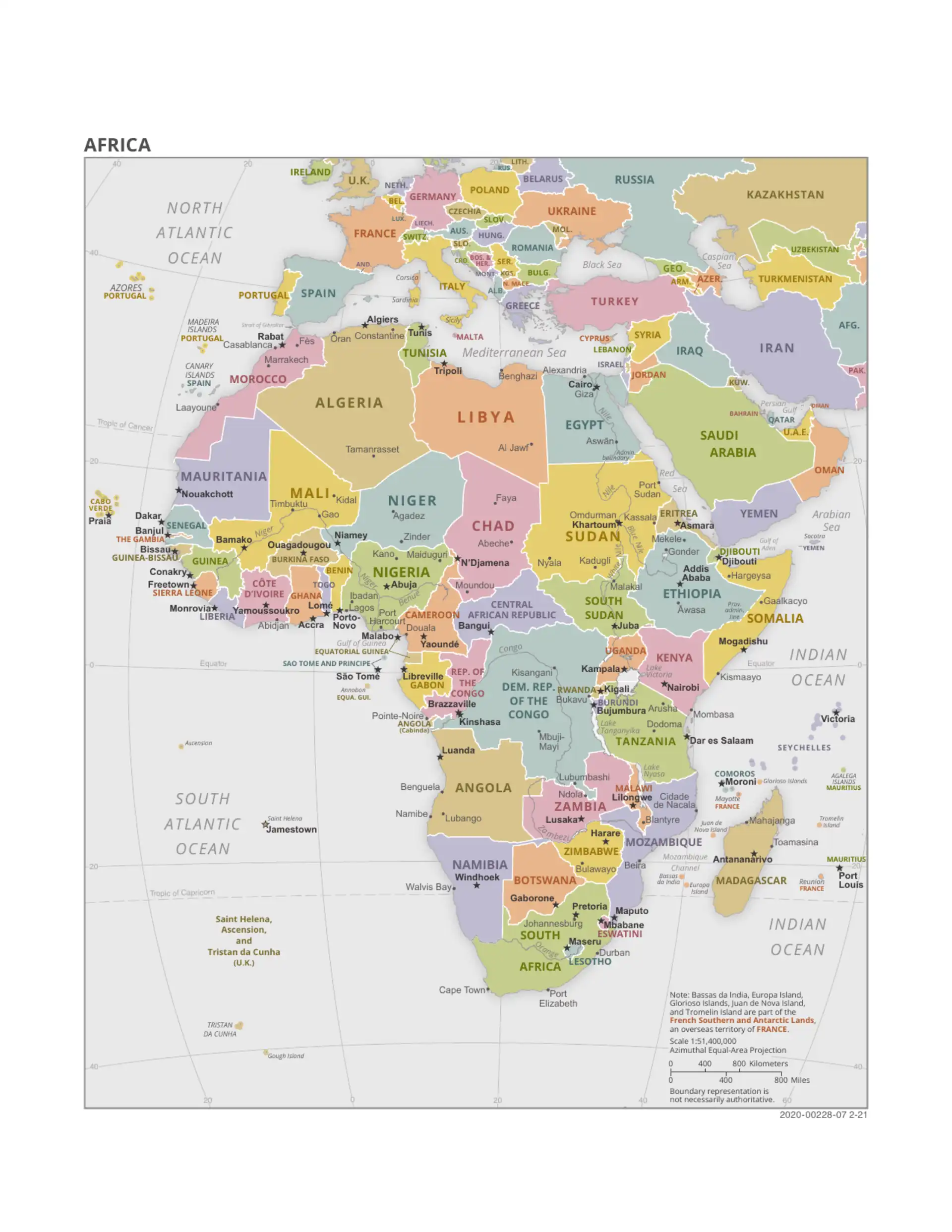
Last updated: September 2026
Interactive Sub-Saharan Africa Map
Where Is Sub-Saharan Africa? Definition and Borders
The term "Sub-Saharan Africa" describes the African continent's region situated south of the Sahara Desert, the world's largest hot desert that acts as a natural boundary separating North Africa from the rest of the continent. This geographical designation encompasses diverse landscapes ranging from tropical rainforests and savannas to mountains, plateaus, and coastal plains. The region stretches from the Atlantic Ocean in the west to the Indian Ocean in the east, and from the southern edge of the Sahara to the Cape of Good Hope at Africa's southern tip.
Definitions differ at the northern edge. The UN places Sudan in North Africa and Mauritania in West Africa, so Mauritania counts as Sub-Saharan and Sudan does not. The World Bank's Sub-Saharan Africa group includes Sudan as well. Chad, Niger, Mali and Mauritania all have large Saharan areas in the north but are usually counted as Sub-Saharan.
The Sahara Desert serves as more than just a physical barrier; it has historically influenced cultural, economic, and political development patterns across the continent. Countries immediately south of the Sahara, known as the Sahel region, experience transitional climates and have served as important corridors for trade and cultural exchange between North Africa and Sub-Saharan regions for centuries.
Regional Subdivisions of Sub-Saharan Africa
The 48 countries are grouped below the way the map filters them: 16 West, 14 East, 8 Central and 10 Southern. The UN's own subregions differ slightly (it puts Angola in Central Africa and Malawi, Mozambique, Zambia and Zimbabwe in East Africa).
West Africa
Countries: Nigeria, Ghana, Senegal, Mali, Burkina Faso, Guinea, Sierra Leone, Liberia, Côte d'Ivoire, Benin, Togo, Niger, Guinea-Bissau, Gambia, Cabo Verde and Mauritania (16).
Characteristics: Africa's most populous country (Nigeria), the Niger River, Sahel and Gulf of Guinea coast, oil, gold and cocoa.
East Africa
Countries: Kenya, Tanzania, Uganda, Ethiopia, Rwanda, Burundi, South Sudan, Somalia, Eritrea, Djibouti, Madagascar, Mauritius, Seychelles and Comoros (14).
Characteristics: Great Rift Valley, wildlife tourism, Indian Ocean islands, coffee production, and strategic maritime locations.
Central Africa
Countries: Democratic Republic of Congo, Cameroon, Central African Republic, Chad, Republic of Congo, Equatorial Guinea, Gabon and São Tomé and Príncipe (8).
Characteristics: Congo Basin rainforest, vast mineral wealth, major river systems, and significant biodiversity.
Southern Africa
Countries: South Africa, Botswana, Namibia, Zimbabwe, Zambia, Malawi, Mozambique, Angola, Lesotho and Eswatini (10).
Characteristics: Mining powerhouse, developed infrastructure, diverse economies, and significant agricultural production.
Economic Landscape and Development
Sub-Saharan Africa's economy represents a complex tapestry of traditional agriculture, extractive industries, emerging manufacturing sectors, and rapidly growing service economies. South Africa and Nigeria are the two largest economies and together account for a large share of the region's output. However, the economic landscape varies dramatically between countries, from South Africa's sophisticated financial and industrial sectors to Chad's predominantly agricultural economy.
Key Economic Sectors
Natural Resources: The region is extraordinarily rich in natural resources, containing vast reserves of oil, gold, diamonds, platinum, copper, cobalt, and rare earth minerals. Countries like Nigeria, Angola, and Equatorial Guinea have oil-dependent economies, while South Africa, Ghana, and Tanzania are major gold producers. The Democratic Republic of the Congo supplies about 70% of the world's mined cobalt, essential for battery production.
Agriculture: Despite urbanization trends, agriculture remains crucial for most Sub-Saharan economies, employing over 60% of the population in many countries. Major crops include cocoa (Côte d'Ivoire and Ghana lead global production), coffee (Ethiopia and Uganda), cotton, maize, cassava, and various cash crops for export.
Manufacturing and Industry: South Africa leads the region in manufacturing, followed by Nigeria and Kenya. The sector includes automotive assembly, textiles, food processing, and increasingly, technology manufacturing. Countries like Rwanda and Kenya have emerged as technology hubs, earning recognition for their innovation in mobile banking and e-governance.
Services and Technology: The service sector has experienced rapid growth, particularly in telecommunications, banking, and technology. Mobile phone penetration exceeds 80% in many countries, enabling revolutionary developments in mobile banking (exemplified by Kenya's M-Pesa system) and digital commerce.
Economic Challenges and Opportunities
While Sub-Saharan Africa faces significant economic challenges including infrastructure deficits, limited access to capital, and dependence on commodity exports, the region also presents enormous opportunities. The African Continental Free Trade Area (AfCFTA), which began operations in 2021, aims to create a single continental market, potentially boosting intra-African trade and economic integration.
The region's young demographic profile presents both challenges and opportunities. With over 60% of the population under 25 years old, countries face pressure to create jobs and educational opportunities while potentially benefiting from a large, dynamic workforce. Countries investing in education and technology infrastructure, such as Rwanda and Kenya, have shown remarkable progress in economic diversification and growth.
Cultural Diversity and Heritage
Sub-Saharan Africa is one of the world's most culturally diverse regions, home to over 2,000 languages and countless ethnic groups, each contributing to a rich tapestry of traditions, arts, and social structures. This incredible diversity reflects thousands of years of human development, migration, and cultural exchange, and the region is where anatomically modern humans first evolved.
Linguistic Landscape
The linguistic diversity of Sub-Saharan Africa is unparalleled globally. The region hosts four major language families: Niger-Congo (including Bantu languages spoken across much of eastern and southern Africa), Afro-Asiatic (including Amharic and Oromo), Nilo-Saharan, and Khoisan. Swahili serves as a lingua franca across East Africa, while Hausa performs a similar function in West Africa. Colonial languages like English, French, and Portuguese serve as official languages in many countries, facilitating international communication and trade.
Traditional Arts and Crafts
Sub-Saharan African art traditions have profoundly influenced global artistic movements. Traditional sculpture, particularly bronze work from Benin and wooden carvings from across the continent, demonstrates sophisticated artistic techniques developed over millennia. Textile traditions include the colorful kente cloth of Ghana, mud cloth from Mali, and intricate beadwork from various cultures. Contemporary African artists continue these traditions while engaging with global artistic movements, creating a vibrant, evolving cultural landscape.
Music and Performance
The region has given birth to numerous musical genres that have achieved global recognition. From the complex polyrhythms of West African drumming to the melodic traditions of East African music, Sub-Saharan Africa has profoundly influenced world music. Modern genres like Afrobeat (pioneered by Nigeria's Fela Kuti), highlife, soukous, and kwaito continue to evolve and gain international appreciation. The oral tradition remains strong, with storytelling, praise singing, and ceremonial performances maintaining their cultural importance.
Religious and Social Structures
Religious practices in Sub-Saharan Africa blend traditional African religions with Christianity and Islam. Many communities maintain complex belief systems that honor ancestors, natural spirits, and community values. These religious frameworks often underpin social structures emphasizing community cooperation, respect for elders, and environmental stewardship. Traditional governance systems, from age-grade societies to monarchical structures, continue to influence modern political and social organization.
Wildlife and Natural Environment
Sub-Saharan Africa contains some of Earth's most spectacular and biodiverse ecosystems, supporting an extraordinary array of wildlife and serving as the last stronghold for many iconic species. The region encompasses major biomes including tropical rainforests, savannas, mountains, wetlands, and coastal marine environments, each supporting unique communities of plants and animals.
Iconic Wildlife and Conservation
The region is globally renowned for its "Big Five" (lion, elephant, buffalo, leopard, and rhinoceros) and countless other species. East Africa's Great Migration, where millions of wildebeest, zebras, and gazelles move between Tanzania's Serengeti and Kenya's Maasai Mara, represents one of nature's most spectacular phenomena. Countries like Botswana, Kenya, Tanzania, and South Africa have developed world-class national parks and conservation programs, making wildlife tourism a significant economic sector.
Madagascar, separated from mainland Africa over 160 million years ago, hosts unique endemic species including lemurs, fossas, and numerous plants found nowhere else on Earth. The island's biodiversity is so distinctive that it's often called the "eighth continent" from a biological perspective.
Forest Ecosystems
The Congo Basin, centered in the Democratic Republic of Congo but extending into Cameroon, Central African Republic, Republic of Congo, Equatorial Guinea, and Gabon, contains the world's second-largest tropical rainforest after the Amazon. This ecosystem is crucial for global climate regulation, carbon storage, and biodiversity conservation. It supports forest elephants, gorillas, chimpanzees, and countless other species while providing livelihoods for millions of people.
Marine and Coastal Environments
Sub-Saharan Africa's extensive coastlines along the Atlantic and Indian Oceans support rich marine ecosystems. The waters off South Africa and Namibia host significant marine biodiversity, including great white sharks, seals, and seasonal whale migrations. East Africa's coral reefs, particularly around Kenya, Tanzania, and the Indian Ocean islands, support vibrant marine communities and important fishing industries.
Environmental Challenges
Climate change poses significant threats to Sub-Saharan Africa's environments and wildlife. Desertification affects the Sahel region, while changing rainfall patterns impact agriculture and water resources. Deforestation pressures, particularly in the Congo Basin, threaten critical ecosystems. However, many countries have implemented innovative conservation strategies, including community-based conservation programs, anti-poaching initiatives, and sustainable tourism development.
Historical Perspectives and Modern Development
Sub-Saharan Africa's history spans millions of years of human evolution and thousands of years of complex civilizations, trade networks, and cultural development. Archaeological evidence shows that modern humans originated in this region, and throughout history, sophisticated kingdoms and empires have flourished across the continent.
Ancient Civilizations and Kingdoms
The region hosted numerous powerful kingdoms and empires throughout history. The Kingdom of Kush (in present-day Sudan) controlled trade along the Nile and even ruled Egypt for a period. West Africa saw the rise of the Ghana Empire (not related to modern Ghana), Mali Empire, and Songhai Empire, which controlled trans-Saharan trade routes and accumulated enormous wealth. The Kingdom of Great Zimbabwe built impressive stone structures that gave the modern country its name, while various kingdoms in present-day Uganda, Rwanda, and Ethiopia maintained sophisticated political and economic systems.
Colonial Period and Independence
The colonial period, primarily from the late 19th to mid-20th centuries, dramatically altered Sub-Saharan Africa's political landscape. European powers drew artificial boundaries that often divided ethnic groups and combined hostile communities, creating challenges that persist today. However, the independence movements of the 1950s and 1960s demonstrated remarkable resilience and determination, with leaders like Kenya's Jomo Kenyatta, Ghana's Kwame Nkrumah, and Tanzania's Julius Nyerere leading their nations to freedom.
Contemporary Challenges and Achievements
Modern Sub-Saharan Africa faces complex challenges including governance issues, infrastructure development needs, health challenges, and economic diversification requirements. However, the region has also achieved remarkable successes. Countries like Botswana and Rwanda have demonstrated that good governance can drive rapid development. Technological innovations, particularly in mobile banking and renewable energy, have positioned some Sub-Saharan African countries as global leaders in these sectors.
The region's young population, growing middle class, and increasing connectivity present enormous opportunities for future development. Educational improvements, particularly increasing literacy rates and expanding higher education, are creating more skilled workforces. Regional integration efforts, including the African Union and various regional economic communities, are promoting cooperation and trade.
How to Use the Map
Markers are coloured by region: red for West Africa, blue for East Africa, orange for Central Africa and purple for Southern Africa. Use the buttons to show one region at a time, or only landlocked, coastal or island countries (16 of the 48 are landlocked). Click a marker for the capital, approximate population and main economic activities.
For each subregion in more detail, see the West Africa, East Africa, Central Africa and Southern Africa maps; the countries north of the Sahara are on the North Africa map.
Frequently Asked Questions
What is Sub-Saharan Africa?
Sub-Saharan Africa refers to the African countries lying wholly or mostly south of the Sahara Desert. Under the UN definition that is 48 of Africa's 54 countries: all except Algeria, Egypt, Libya, Morocco, Sudan and Tunisia.
Which countries are NOT in Sub-Saharan Africa?
The UN excludes the six North African countries (Algeria, Egypt, Libya, Morocco, Sudan and Tunisia) and the disputed territory of Western Sahara. The World Bank, however, counts Sudan as Sub-Saharan.
Is Mauritania in Sub-Saharan Africa?
Yes, under the UN definition, which places Mauritania in West Africa. It is also a member of the Arab Maghreb Union, so some sources group it with North Africa.
What is the largest country in Sub-Saharan Africa?
The Democratic Republic of the Congo is the largest Sub-Saharan country by area (about 2.34 million km²), while Nigeria is by far the most populous (about 230 million people).