Morocco: Kingdom at Africa's Northwestern Gateway
The Kingdom of Morocco, known as Al-Mamlakah al-Maghribiyah in Arabic, stands as one of Africa's most geographically diverse and culturally rich nations. Stretching from the Mediterranean Sea in the north to the vast Sahara Desert in the south, Morocco covers 446,550 square kilometers, or about 710,000 square kilometers if the disputed territory of Western Sahara, most of which Morocco administers, is included.
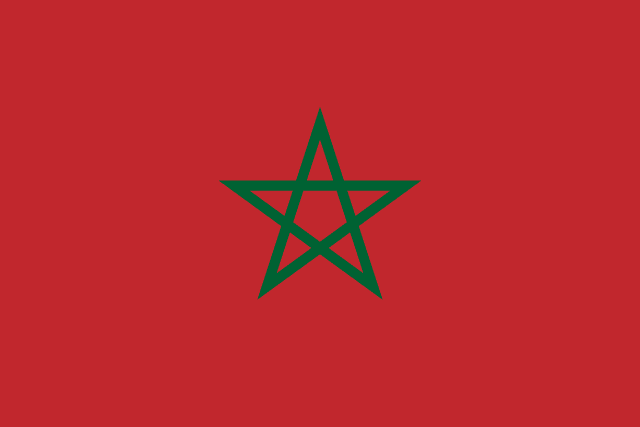
Flag of Morocco
Morocco Key Facts
Morocco is a kingdom in the north-west corner of North Africa, with coasts on the Atlantic Ocean and the Mediterranean Sea and only 14 km from Spain across the Strait of Gibraltar. Its capital is Rabat and its largest city is Casablanca. About 37 million people live in its 446,550 km²; Morocco also claims and administers most of the disputed territory of Western Sahara to the south.
| Fact | Morocco |
|---|---|
| Official name | Kingdom of Morocco |
| Capital | Rabat |
| Largest city | Casablanca (over 3 million) |
| Population | About 36.8 million (2024 census) |
| Area | 446,550 km² excluding Western Sahara; about 712,000 km² including it |
| Official languages | Arabic and Amazigh (Berber); Moroccan Arabic (Darija) is the everyday language and French is widely used in business and education |
| Currency | Moroccan dirham (MAD) |
| Government | Constitutional monarchy |
| Independence | 2 March 1956, from France (Spain gave up its northern protectorate the same year) |
| Neighbours | Algeria (border closed since 1994), Spain (land borders at Ceuta and Melilla), Western Sahara (disputed territory) |
| Region | North Africa |
| Highest point | Jebel Toubkal, 4,167 m, the highest peak in North Africa |
| Main rivers | Oum Er-Rbia, Sebou, Moulouya, Drâa, Tensift, Souss |
| Climate | Mediterranean in the north, mild on the Atlantic coast, snowy winters in the Atlas and hot desert in the south and east |
| Economy | Phosphates (OCP; about 70% of known world reserves), car and aerospace manufacturing, agriculture, tourism (a record 17.4 million visitors in 2024) and remittances |
| Time zone | UTC+1 (clocks move back to UTC+0 during Ramadan) |
| Calling code | +212 |
Figures are rounded. Population figures are 2024 UN estimates unless a census is cited.
Regions and Main Cities of Morocco
Morocco is divided into 12 regions: Tanger-Tétouan-Al Hoceïma, Oriental, Fès-Meknès, Rabat-Salé-Kénitra, Béni Mellal-Khénifra, Casablanca-Settat, Marrakech-Safi, Drâa-Tafilalet, Souss-Massa, Guelmim-Oued Noun, Laâyoune-Sakia El Hamra and Dakhla-Oued Ed-Dahab. The last two lie in Western Sahara, whose status is disputed. The largest cities are Casablanca, Fez, Tangier, Marrakech, Salé, Meknes, Rabat, Oujda, Kenitra and Agadir.
See also our comparisons of Algeria vs Morocco and Tunisia vs Morocco.
Morocco on the Map of Africa
View Morocco's strategic location at the northwestern gateway of Africa, where the continent nearly touches Europe:
Map of Morocco
Explore the detailed map of Morocco from the Mediterranean coast to the Sahara (the status of Western Sahara, in the south, is disputed):
Morocco's Strategic Location in Northwestern Africa
Morocco occupies an exceptionally strategic position at the northwestern corner of Africa, where the continent nearly touches Europe across the narrow Strait of Gibraltar. The country is bounded by the Mediterranean Sea to the north and the Atlantic Ocean to the west, giving it a coastline of about 1,835 kilometers (over 3,000 kilometers including Western Sahara). To the east Morocco borders Algeria, and to the south lies Western Sahara, a territory Morocco claims and largely administers but whose status is disputed.
The Strait of Gibraltar, measuring just 14 kilometers at its narrowest point, separates Morocco from Spain and Europe. This proximity has profoundly influenced Morocco's history, making it a crucial bridge between Africa, Europe, and the Middle East. The strategic importance of controlling both sides of the strait has shaped regional politics for centuries, with the Spanish enclaves of Ceuta and Melilla remaining as reminders of this historical dynamic.
Diverse Geographical Regions
Morocco's geography presents remarkable diversity, encompassing four major mountain ranges, expansive plains, vast deserts, and two distinct coastlines. The Atlas Mountains dominate the country's topography, divided into three ranges: the Middle Atlas, High Atlas, and Anti-Atlas. The High Atlas contains North Africa's highest peak, Jebel Toubkal, rising to 4,167 meters. These mountains create a natural barrier between Morocco's fertile northwestern regions and the Sahara Desert, significantly influencing climate patterns and human settlement.
The Rif Mountains run parallel to the Mediterranean coast in northern Morocco, creating dramatic landscapes and harboring unique ecosystems. These mountains, reaching heights of over 2,400 meters, have historically served as a refuge for Berber communities and remain culturally distinct from other Moroccan regions. The rugged terrain has preserved traditional ways of life while also presenting challenges for development and integration.
Between the mountain ranges lie fertile plains and plateaus that form Morocco's agricultural heartland. The Gharb Plain along the Atlantic coast, the Saïss Plain around Fez, and the Haouz Plain near Marrakech support intensive agriculture and dense populations. These regions benefit from rivers flowing from the Atlas Mountains, including the Sebou, Morocco's largest river by volume, and the Oum Er-Rbia, one of its longest permanent rivers.
Western Sahara and Morocco's Southern Regions
South of the Anti-Atlas, Morocco's Guelmim-Oued Noun region leads into Western Sahara, a former Spanish colony of about 266,000 square kilometers. Morocco administers roughly 80% of it as the regions of Laâyoune-Sakia El Hamra and Dakhla-Oued Ed-Dahab and calls it its Southern Provinces; the Polisario Front, which proclaimed the Sahrawi Arab Democratic Republic, controls the thinly populated east beyond a long defensive sand wall. The United Nations lists Western Sahara as a non-self-governing territory, and a negotiated settlement is still being sought; Morocco's 2007 autonomy plan has gained growing international support. Morocco has invested heavily in cities, ports and roads in the area it administers.
The Atlantic coast of Western Sahara features some of the world's richest fishing grounds, where the cold Canary Current meets warmer waters, creating ideal conditions for marine life. Cities like Laâyoune and Dakhla have developed into important fishing and processing centers, while also emerging as destinations for water sports enthusiasts drawn by consistent winds and pristine beaches. The Bou Craa phosphate mine near Laâyoune adds to Morocco's output, although most of its phosphate comes from Khouribga and other deposits in Morocco proper.
Inland, the desert south showcases diverse desert landscapes from rocky hammadas to sand seas (ergs), interspersed with oases that have supported trans-Saharan trade routes for centuries. The government's development programs have brought modern amenities to these remote areas, including renewable energy projects that harness the region's abundant solar and wind resources. The Noor Ouarzazate Solar Complex, one of the world's largest concentrated solar power plants, exemplifies Morocco's push into renewable energy.
Climate Zones and Natural Diversity
Morocco's varied topography creates distinct climate zones, from Mediterranean conditions along the northern coast to extreme desert climate in the Sahara. The northwestern regions enjoy a Mediterranean climate with hot, dry summers and mild, wet winters. Annual rainfall in these areas ranges from 400-800mm, supporting diverse agriculture including citrus groves, olive trees, and vineyards. The Atlantic influence moderates temperatures along the western coast, creating ideal conditions for year-round tourism.
The Atlas Mountains experience their own climate patterns, with heavy snowfall on higher peaks during winter, making them popular skiing destinations. These mountains act as a watershed, capturing moisture from Atlantic storms and feeding rivers that irrigate the plains below. The mountain climate supports unique ecosystems, including cedar forests in the Middle Atlas that harbor endangered Barbary macaques, North Africa's only native primate.
The southeastern regions and the Sahara experience extreme continental and desert climates. Summer temperatures regularly exceed 45°C, while winter nights can approach freezing. Despite minimal rainfall (often less than 100mm annually), these regions support adapted flora and fauna, including acacia trees, date palms in oases, and wildlife such as fennec foxes, sand cats, and various reptile species. The contrast between verdant oases and surrounding desert creates some of Morocco's most striking landscapes.
Rich Cultural Heritage and Historical Legacy
Morocco's cultural identity reflects millennia of Berber (Amazigh) heritage enriched by Arab, African, and European influences. The indigenous Amazigh peoples, who have inhabited North Africa since prehistoric times, maintain strong cultural traditions throughout Morocco, particularly in mountainous regions and the south. The Amazigh languages, recognized as official languages alongside Arabic since 2011, are spoken by a large minority of Moroccans, with distinct dialects including Tachelhit, Tamazight, and Tarifit.
The arrival of Islam in the 7th century and subsequent Arab migrations profoundly shaped Moroccan society. The establishment of the Idrisid dynasty in 788 CE marked the beginning of Morocco as an independent Muslim state. Successive dynasties - the Almoravids, Almohads, Marinids, Saadians, and the current Alaouite dynasty (ruling since 1666) - have each contributed to Morocco's architectural, cultural, and intellectual heritage. This continuity of monarchy makes Morocco one of the world's oldest kingdoms.
Morocco's Jewish heritage represents another vital component of national identity. Jewish communities have lived in Morocco for over 2,000 years, contributing significantly to commerce, crafts, and culture. Though most Moroccan Jews emigrated after 1948, their legacy remains visible in preserved mellahs (Jewish quarters) in cities like Fez, Marrakech, and Essaouira, and in the continued influence on Moroccan music, cuisine, and traditions. The government actively preserves Jewish heritage sites as part of Morocco's multicultural identity.
Imperial Cities and Urban Centers
Morocco's four imperial cities - Fez, Marrakech, Meknes, and Rabat - each served as capital under different dynasties, leaving magnificent architectural legacies. Fez, founded in the 9th century, contains the world's largest car-free urban area in its medieval medina. The city's Al-Qarawiyyin University, established in 859 CE, is recognized by UNESCO and Guinness World Records as the world's oldest continuously operating educational institution. Fez remains Morocco's spiritual and intellectual center, preserving traditional crafts and Islamic scholarship.
Marrakech, the "Red City" named for its distinctive sandstone buildings, epitomizes Morocco's exotic appeal. Founded by the Almoravids in 1062, the city combines historical monuments like the Koutoubia Mosque and Saadian Tombs with vibrant souks and the famous Jemaa el-Fnaa square, recognized by UNESCO as a Masterpiece of Oral and Intangible Heritage. Modern Marrakech has evolved into an international destination while maintaining its authentic character, attracting millions of visitors annually.
Rabat, the current capital, blends historical significance with modern governance. The city's landmarks span from the 12th-century Hassan Tower and Kasbah of the Udayas to contemporary architecture housing government institutions. As Morocco's political center, Rabat projects a more reserved atmosphere than tourist magnets like Marrakech, yet offers refined cultural attractions including world-class museums and peaceful Andalusian gardens.
Casablanca, though not an imperial city, stands as Morocco's economic powerhouse and largest urban center with over 3.5 million inhabitants. The city symbolizes Morocco's modernization, featuring the spectacular Hassan II Mosque with a 210-meter minaret, one of the tallest in the world, alongside a skyline of modern offices and Morocco's principal port. Casablanca generates over 30% of Morocco's GDP, hosting corporate headquarters, financial institutions, and industrial facilities.
Economic Development and Resources
Morocco's economy demonstrates remarkable diversification, reducing traditional dependence on agriculture through development of industry, services, and tourism. The country's strategic location and political stability have attracted significant foreign investment, particularly from Europe and Gulf states. Major economic sectors include automotive manufacturing (with Renault and Stellantis operating large plants), aerospace components, textiles, and renewable energy.
Phosphate mining and processing remain economically crucial, with Morocco holding roughly 70% of the world's known phosphate reserves. The state-owned OCP Group ranks among the world's largest fertilizer producers, with its main mines at Khouribga, Benguerir and Youssoufia and a smaller mine at Bou Craa in Western Sahara. Agricultural exports, particularly citrus fruits, vegetables, and olive oil, benefit from proximity to European markets and free trade agreements.
Tourism contributes significantly to Morocco's economy, typically accounting for 10-12% of GDP and employing over 500,000 people directly. The sector has recovered strongly from the pandemic, reaching a record of about 17.4 million visitors in 2024. Morocco's tourism offerings range from cultural heritage tours and desert adventures to beach resorts and mountain trekking, attracting diverse international markets. Morocco hosted the Africa Cup of Nations in 2025–26 and will co-host the 2030 FIFA World Cup with Spain and Portugal, driving new investment in stadiums, hotels and transport.
Infrastructure and Mega Projects
Morocco has invested heavily in modern infrastructure to support economic development and territorial integration. The high-speed rail line (Al Boraq) connecting Tangier and Casablanca, Africa's first high-speed railway, symbolizes these ambitions. The network will eventually extend to Marrakech and Agadir, reducing travel times and boosting economic connections. The country's highway network has expanded dramatically, including modern autoroutes connecting major cities and extending into the south.
Port infrastructure represents another priority, with Tanger Med becoming Africa's largest port and a major Mediterranean hub. Located strategically near the Strait of Gibraltar, Tanger Med handled more than 10 million containers (TEU) in 2024 and serves as a crucial link in global supply chains. Additional ports at Casablanca, Agadir, and Dakhla support trade and fishing industries, while new developments aim to position Morocco as a gateway between Europe, Africa, and the Americas.
Renewable energy projects demonstrate Morocco's commitment to sustainable development and energy independence. Beyond the Noor Ouarzazate complex, wind farms along the Atlantic coast and solar installations throughout the kingdom aim to generate 52% of electricity from renewable sources by 2030. These projects combine environmental goals with economic development, creating jobs and attracting international partnerships.
Cultural Traditions and Modern Life
Moroccan culture balances deep-rooted traditions with contemporary influences, creating a unique social fabric. Traditional music styles including Gnawa, Andalusian classical, Chaabi, and Amazigh folk music remain vibrant, while fusion with modern genres produces innovative sounds gaining international recognition. The annual Gnawa and World Music Festival in Essaouira exemplifies this cultural dynamism, attracting performers and audiences from around the globe.
Moroccan cuisine, recognized worldwide for its sophisticated flavors and techniques, reflects the country's diverse influences. Signature dishes like tagines, couscous, pastilla, and harira showcase the skilled use of spices including saffron, cumin, cinnamon, and preserved lemons. Regional variations add richness: seafood dominates coastal areas, while inland regions favor meat and vegetable combinations. The tradition of mint tea, served throughout the day, represents Moroccan hospitality at its finest.
Traditional crafts remain economically and culturally important, with entire neighborhoods in medinas dedicated to specific trades. Leather working in Fez, carpet weaving in the Middle Atlas, pottery in Fez and Salé, and metalwork throughout the country preserve techniques passed down through generations. The government and NGOs support artisan cooperatives, particularly women's cooperatives producing argan oil and textiles, combining cultural preservation with economic empowerment.
Education and Human Development
Morocco has made substantial progress in education, achieving near-universal primary enrollment and expanding higher education. The government's Vision 2030 education strategy emphasizes quality improvement, vocational training, and alignment with economic needs. Universities in Rabat, Casablanca, Fez, and other cities offer diverse programs, while international partnerships bring foreign institutions and exchange opportunities.
Language education reflects Morocco's multicultural reality, with students learning Arabic, French, and increasingly English and Spanish. The recognition of Amazigh languages has led to their introduction in schools, preserving linguistic heritage while promoting social inclusion. Technical and vocational training receives growing emphasis, preparing youth for employment in automotive, aerospace, tourism, and other growth sectors.
Human development indicators show steady improvement, though regional disparities persist. Urban areas generally enjoy better access to education, healthcare, and economic opportunities than rural regions. Government programs target these disparities through rural electrification, road construction, and mobile health services. The National Initiative for Human Development (INDH) has implemented thousands of projects focusing on poverty reduction and social inclusion.
Environmental Conservation and Challenges
Morocco faces environmental challenges including water scarcity, desertification, and climate change impacts. The country has responded with comprehensive strategies including dam construction for water storage, drip irrigation promotion, and reforestation programs. The Green Morocco Plan (Plan Maroc Vert) modernizes agriculture while promoting sustainable practices, benefiting both productivity and environmental conservation.
Protected areas cover approximately 1.5% of Morocco's territory, preserving diverse ecosystems from Mediterranean forests to Saharan landscapes. National parks like Toubkal, Ifrane, and Souss-Massa protect endangered species including Barbary macaques, Northern bald ibis, and various gazelle species. Marine protected areas along both Atlantic and Mediterranean coasts aim to preserve fish stocks and coastal ecosystems.
Climate change adaptation receives high priority given Morocco's vulnerability to temperature increases and precipitation changes. Hosting COP22 in Marrakech in 2016 highlighted Morocco's climate leadership among developing nations. Initiatives include renewable energy expansion, sustainable urban planning, and agricultural adaptation measures. The pledge to cut greenhouse gas emissions by 45.5% by 2030 (largely conditional on international support) demonstrates serious engagement with global climate goals.
International Relations and Regional Role
Morocco maintains a balanced foreign policy, nurturing strong ties with Europe, the Arab world, and increasingly with sub-Saharan Africa. The country's return to the African Union in 2017 after a 33-year absence signaled renewed commitment to continental partnership. Morocco has become a significant investor in African countries, with banks, telecommunications companies, and other businesses expanding across the continent.
Relations with Europe remain economically crucial, with the European Union accounting for over 60% of Morocco's trade. Advanced Status with the EU, granted in 2008, provides privileged partnership beyond standard association agreements. Morocco also maintains strategic partnerships with the United States, China, and Gulf countries, diversifying diplomatic and economic relationships.
Morocco's role in regional security includes cooperation on counter-terrorism, migration management, and religious diplomacy. The Mohammed VI Institute for Training Imams promotes moderate Islam, training religious leaders from Africa and beyond. Morocco's approach to migration has evolved from transit country to destination, with policies granting residency to sub-Saharan African migrants reflecting humanitarian concerns and economic integration goals.
Tourism and Natural Wonders
Morocco's tourism appeal stems from extraordinary diversity - visitors can ski in the Atlas Mountains and swim in the Atlantic on the same day. The country offers experiences ranging from luxury resorts in Marrakech to authentic desert camps in Merzouga. Cultural tourism thrives in imperial cities, while adventure tourism grows in mountainous and desert regions. Beach tourism develops along both Mediterranean and Atlantic coasts, with Agadir as the premier resort destination.
The Sahara Desert experience remains a highlight for many visitors. From Marrakech or Fez, travelers journey through dramatic landscapes including the Todra and Dades Gorges before reaching the sand dunes of Erg Chebbi or Erg Chigaga. Camel treks, desert camps under starlit skies, and encounters with nomadic cultures create unforgettable memories. Western Sahara, further south, offers even more remote desert and coastal experiences around Dakhla, with vast expanses rarely visited by tourists.
Coastal attractions include the blue-painted mountain town of Chefchaouen, the artistic community of Essaouira with its fortified medina and windswept beaches, and the modern beach resorts of Mazagan and Saïdia. Each destination offers distinct character - from Chefchaouen's photogenic streets to Essaouira's bohemian atmosphere and world-class windsurfing conditions.
Future Prospects and Vision 2030
Morocco's development trajectory aims to achieve upper-middle-income status while preserving cultural identity and environmental sustainability. The New Development Model, launched in 2021, outlines comprehensive reforms targeting inclusive growth, improved governance, and human capital development. Key objectives include reducing income inequality, creating quality employment for youth, and strengthening institutions.
Economic diversification continues through industrial development, particularly in automotive and aerospace sectors where Morocco has established competitive advantages. The Tangier Tech City project aims to create a technology hub attracting international companies and fostering local innovation. Green hydrogen production represents another frontier, with Morocco's renewable energy resources positioning it as a potential major supplier to Europe.
Regional development focuses on reducing disparities between urban centers and peripheral areas, including continued investment in the south. Infrastructure projects, industrial zones, and tourism development aim to create balanced growth across the kingdom. The emphasis on sustainable development ensures future generations inherit both economic opportunities and environmental resources.
Conclusion: Morocco's Unique Position in Africa
Morocco's position on the map of Africa represents far more than geographical coordinates - it embodies a nation that bridges continents, cultures, and epochs. From the Mediterranean shores to the Atlantic coast, from snow-capped Atlas peaks to Saharan dunes, Morocco's diverse landscapes mirror its cultural richness. The kingdom's territory, extending from the Strait of Gibraltar to the Sahara, encompasses extraordinary natural and human diversity.
Understanding Morocco's place on the African map requires appreciating its role as a civilizational crossroads where Berber, Arab, African, and European influences create unique synthesis. The country's political stability, economic dynamism, and cultural vitality position it as a key player in African development and Mediterranean partnership. Morocco's investments in infrastructure, renewable energy, and human development demonstrate commitment to sustainable progress.
Whether exploring ancient medinas, trekking mountain trails, surfing Atlantic waves, or experiencing Saharan solitude, visitors discover a land where tradition and modernity coexist harmoniously. As Morocco continues advancing its development goals while preserving its distinctive identity, the kingdom's significance on Africa's map - both literally and figuratively - will only grow. This northwestern African nation stands ready to play an increasingly important role in continental and global affairs while remaining true to its motto: "God, Homeland, King."
Frequently Asked Questions about Morocco
What is the capital of Morocco?
Rabat is the capital of Morocco. Casablanca is the largest city and main economic centre, and Fez, Marrakech and Meknes are former imperial capitals.
Is Western Sahara part of Morocco?
Its status is disputed. Morocco claims Western Sahara and administers about 80% of it as its Southern Provinces, while the Polisario Front, which proclaimed the Sahrawi Arab Democratic Republic, controls the eastern strip. The United Nations lists it as a non-self-governing territory; Morocco's 2007 autonomy plan has gained growing international support as the basis for a negotiated settlement.
What is the highest mountain in Morocco?
Jebel Toubkal in the High Atlas, at 4,167 meters, is the highest mountain in Morocco and in all of North Africa.
What languages are spoken in Morocco?
Arabic and Amazigh (Berber) are the official languages. Most people speak Moroccan Arabic (Darija) day to day, and French is widely used in business, higher education and government.
What currency does Morocco use?
Morocco uses the Moroccan dirham (MAD).