Egypt: The Gift of the Nile
Egypt is a country in north-east Africa, with the Sinai Peninsula extending into Asia. It covers about 1 million km², mostly desert, and nearly everyone lives along the Nile valley and delta. The capital and largest city is Cairo. Egypt has about 108 million residents according to its statistics agency (UN estimates are higher), Arabic is the official language, and the currency is the Egyptian pound. It borders Libya, Sudan, Israel and the Gaza Strip.
Egypt, officially the Arab Republic of Egypt, stands as one of the world's most historically significant nations and a cornerstone of African civilization. Located at the northeastern corner of Africa, Egypt serves as a transcontinental bridge between Africa and Asia through the Sinai Peninsula. This page covers Egypt's position on the map of Africa, the Nile, its deserts and coasts, its ancient and modern history, its economy and its main tourist sites.
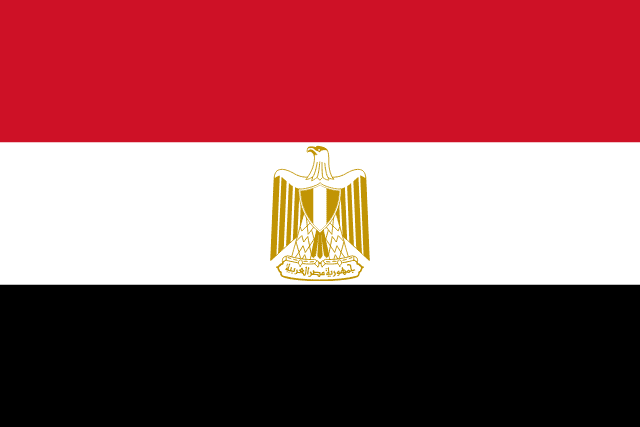
Flag of Egypt
Egypt on the Map of Africa
View Egypt's strategic location at the northeastern corner of Africa, bridging to Asia through the Sinai Peninsula:
Map of Egypt
Explore the detailed map of Egypt showing the Nile River, major cities, deserts, and the Red Sea coastline:

Egypt Facts at a Glance
| Official name | Arab Republic of Egypt |
|---|---|
| Capital | Cairo; a New Administrative Capital is being built about 45 km east of Cairo, and ministries have begun moving there |
| Largest city | Cairo |
| Region | North Africa. Egypt is transcontinental: the Sinai Peninsula lies in Asia. |
| Population | About 108 million residents (official 2025 count; UN estimates are higher, about 118 million) |
| Area | 1,001,450 km² (386,662 sq mi) – but about 95% of people live on the roughly 5% of land along the Nile valley and delta |
| Coastline | About 2,450 km of coastline on the Mediterranean and Red Sea |
| Official languages | Arabic (Egyptian Arabic is the spoken form) |
| Currency | Egyptian pound (EGP) |
| Government | Presidential republic |
| Independence | 28 February 1922, from the United Kingdom (full sovereignty followed the 1952 revolution and the 1956 British withdrawal) |
| Neighbouring countries | 4: Libya, Sudan, Israel, Gaza Strip (Palestine). Egypt also faces Saudi Arabia and Jordan across the Red Sea and Gulf of Aqaba. |
| Administrative divisions | 27 governorates |
| Main cities | Cairo, Alexandria, Giza, Shubra El Kheima, Port Said, Suez, Luxor, Aswan |
| Highest point | Mount Catherine (Gabal Katrina), 2,629 m (8,625 ft), in Sinai |
| Rivers and lakes | The Nile, Lake Nasser (behind the Aswan High Dam) and the Suez Canal; lowest point the Qattara Depression (−133 m) |
| Climate | Hot desert: very dry, with hot summers and mild winters; the Mediterranean coast gets a little winter rain |
| Economy | Services, tourism, Suez Canal fees, remittances, natural gas and manufacturing; agriculture along the Nile |
| Time zone | UTC+2 (Eastern European Time); UTC+3 in summer (daylight saving was reinstated in 2023) |
| Calling code | +20 |
Population figures are rounded 2025 estimates from the UN World Population Prospects 2024 unless stated otherwise. Facts checked September 2026.
See also: Cairo city guide, countries of North Africa, Arabic-speaking countries in Africa, most populous countries in Africa, largest countries in Africa by area, African independence timeline.
Egypt's Strategic Position on Africa's Map
Egypt occupies a unique geographical position that has shaped its destiny throughout history. Situated in the northeastern corner of Africa, Egypt borders the Mediterranean Sea to the north and the Red Sea to the east. The country shares land borders with Libya to the west, Sudan to the south, and Israel and the Gaza Strip to the northeast. This strategic location at the crossroads of Africa, Asia, and Europe has made Egypt a crucial player in regional politics, trade, and cultural exchange for over 5,000 years.
The Sinai Peninsula, Egypt's triangular extension into Asia, serves as a land bridge between continents. This 60,000-square-kilometer peninsula has witnessed countless military campaigns, trade caravans, and religious pilgrimages throughout history. The Suez Canal, completed in 1869, further enhanced Egypt's strategic importance by creating a vital maritime shortcut between Europe and Asia, eliminating the need to circumnavigate Africa.
The Nile River: Egypt's Lifeline
The Nile River, the world's longest river at 6,650 kilometers, defines Egypt's existence. Ancient Greek historian Herodotus famously called Egypt "the gift of the Nile," recognizing how this mighty river created a ribbon of life through the otherwise inhospitable Sahara Desert. The Nile flows northward through Egypt for about 1,500 kilometres, creating a fertile valley that varies from 5 to 20 kilometers in width.
The river's annual flood cycle, though now controlled by the Aswan High Dam, historically deposited nutrient-rich silt across the floodplain, enabling agriculture in an otherwise arid land. This predictable flooding pattern allowed ancient Egyptians to develop one of history's earliest and most sophisticated civilizations. Today, approximately 95% of Egypt's population lives within 20 kilometers of the Nile, demonstrating the river's continued importance.
The Nile Delta, where the river fans out into the Mediterranean Sea, forms one of the world's largest river deltas. Covering approximately 24,000 square kilometers, this triangular region contains Egypt's most fertile agricultural land and supports dense population centers including Alexandria, Egypt's second-largest city and principal seaport.
Diverse Geographical Regions
Egypt's territory of 1,001,450 square kilometers encompasses diverse geographical regions beyond the Nile Valley. The Western Desert, part of the Sahara, covers about two-thirds of Egypt's land area. This vast expanse contains several oases including Siwa, Bahariya, Farafra, Dakhla, and Kharga, which have supported human habitation for millennia through natural springs and artesian wells.
The Eastern Desert, stretching between the Nile Valley and the Red Sea, features rugged mountains reaching heights of over 2,000 meters. These mountains, known as the Red Sea Hills, contain valuable mineral deposits including gold, phosphates, and oil. The region's dramatic landscapes include colorful canyons, ancient quarries, and prehistoric rock art sites.
The Sinai Peninsula presents another distinct geographical region with its own mountain ranges, including Mount Catherine (Gebel Katherina), Egypt's highest peak at 2,629 meters. The peninsula's diverse ecosystems range from Mediterranean coastal areas in the north to coral reef-fringed Red Sea coasts in the south, with stark desert mountains dominating the interior.
Climate and Natural Environment
Egypt's climate is predominantly desert, characterized by hot, dry summers and mild winters. The Mediterranean coast experiences more moderate temperatures and receives the majority of Egypt's limited rainfall, averaging 100-200mm annually. Cairo and the Nile Valley see minimal precipitation, typically less than 25mm per year, making irrigation essential for agriculture.
Summer temperatures in Upper Egypt and the deserts frequently exceed 40°C, while winter brings pleasant conditions ideal for tourism. The transitional seasons of spring and autumn can bring khamaseen winds - hot, dry sandstorms that blow from the Sahara. Despite harsh conditions, Egypt's deserts support adapted wildlife including gazelles, hyenas, fennec foxes, and numerous reptile species.
The Red Sea coast boasts one of the world's most spectacular marine environments. Coral reefs stretching along the entire coastline support incredible biodiversity, including over 1,200 fish species and 250 types of coral. This underwater paradise attracts divers and snorkelers from around the globe, contributing significantly to Egypt's tourism economy.
Ancient Egyptian Civilization
Egypt's ancient civilization represents one of humanity's greatest achievements, spanning over 3,000 years of continuous development. Beginning around 3100 BCE with the unification of Upper and Lower Egypt under King Narmer, ancient Egypt developed sophisticated systems of writing, mathematics, medicine, and engineering that influenced subsequent civilizations.
The pyramids of Giza, built during the Old Kingdom (c. 2686-2181 BCE), stand as eternal monuments to ancient Egyptian engineering prowess. The Great Pyramid of Khufu, originally standing 146.5 meters tall, remained the world's tallest man-made structure for over 3,800 years. These massive monuments, along with the Great Sphinx, continue to inspire awe and scholarly debate about their construction methods and symbolic significance.
The Valley of the Kings near Luxor served as the royal necropolis during the New Kingdom (c. 1550-1077 BCE), containing elaborately decorated tombs of pharaohs including Tutankhamun, Ramesses II, and Seti I. The discovery of Tutankhamun's intact tomb in 1922 by Howard Carter revealed the incredible wealth and artistry of ancient Egyptian civilization, sparking worldwide fascination that continues today.
Religious and Cultural Heritage
Egypt's religious heritage encompasses ancient polytheistic traditions, early Christianity, and Islam. Ancient Egyptian religion, with its complex pantheon of gods and elaborate afterlife beliefs, profoundly influenced art, architecture, and daily life for millennia. Temples dedicated to gods like Amun-Ra, Isis, and Osiris still stand as magnificent testimonies to these beliefs.
Christianity arrived early in Egypt, with tradition holding that St. Mark brought the faith to Alexandria in the first century CE. The Coptic Orthodox Church, one of Christianity's oldest denominations, maintains a strong presence in modern Egypt, comprising approximately 10% of the population. Coptic monasteries in the Eastern Desert preserve ancient Christian traditions and manuscripts.
Islam arrived in Egypt in 641 CE with the Arab conquest, gradually becoming the dominant religion. Cairo developed into a major center of Islamic learning and culture, home to Al-Azhar University, one of the oldest universities in the world and a leading authority in Sunni Islam. The city's Islamic architecture, from the medieval Citadel to hundreds of historic mosques, creates one of the world's finest collections of Islamic monuments.
Modern Egyptian Society and Culture
Contemporary Egypt blends ancient traditions with modern aspirations. With about 108 million residents (official 2025 count; UN estimates are higher), Egypt is the Arab world's most populous country and Africa's third most populous, after Nigeria and Ethiopia. Egyptian Arabic serves as the primary spoken language, though Modern Standard Arabic is used in formal contexts. Egypt's cultural influence extends throughout the Arab world through its prolific film industry, music, and literature.
Cairo, the capital and largest city with over 20 million inhabitants in its greater metropolitan area, pulses as the cultural heart of the Arab world. The city seamlessly blends Islamic Cairo's medieval streets, Coptic Cairo's ancient churches, and modern districts with shopping centers and international hotels. This juxtaposition of old and new characterizes Egyptian urban life.
Egyptian cuisine reflects the country's agricultural abundance and cultural influences. Staples include ful medames (fava beans), koshari (a mixed rice, lentil, and pasta dish), and various breads. The tradition of mezze - multiple small dishes - showcases ingredients like tahini, baba ghanoush, and fresh vegetables. Egyptian hospitality ensures visitors experience this culinary heritage alongside the country's other attractions.
Economic Landscape
Egypt's economy, one of the three largest in Africa alongside South Africa and Nigeria (rankings shift with exchange rates), relies on diverse sectors including tourism, agriculture, manufacturing, and services. The Suez Canal is a major source of foreign currency: before attacks on Red Sea shipping began in late 2023, roughly 12% of global trade passed through it. Those attacks sharply cut traffic and revenue in 2024. A parallel 'New Suez Canal' section opened in 2015.
Tourism is one of Egypt's largest sources of foreign currency and employs millions directly and indirectly. Visitors flock to experience ancient monuments, Red Sea resorts, Nile cruises, and desert adventures. The government continues investing in tourism infrastructure, including the Grand Egyptian Museum near the Pyramids of Giza, which fully opened in November 2025 and is the largest museum in the world devoted to a single civilisation.
Agriculture, though limited to the Nile Valley and Delta, remains economically significant. Egypt produces cotton (historically famous for its quality), wheat, rice, corn, sugarcane, and various fruits and vegetables. Offshore gas fields in the Mediterranean, above all Zohr (discovered in 2015), briefly made Egypt a net gas exporter, although rising demand and falling output have meant renewed gas imports since 2024.
Major Tourist Destinations
The Pyramids of Giza and the Sphinx remain Egypt's most iconic attractions, drawing millions of visitors annually. These ancient wonders, easily accessible from Cairo, offer experiences from camel rides to sound-and-light shows that bring ancient history to life. Nearby Saqqara features the Step Pyramid of Djoser, one of the oldest large stone buildings in the world.
Luxor, ancient Thebes, contains the world's greatest concentration of ancient monuments. The Karnak Temple Complex, built over 2,000 years, showcases the grandeur of ancient Egyptian architecture. Across the Nile, the Valley of the Kings and Valley of the Queens contain elaborately decorated royal tombs. The well-preserved Luxor Temple, dramatically lit at night, creates unforgettable memories.
Red Sea resorts like Hurghada, Sharm el-Sheikh, and Marsa Alam offer world-class diving and beach experiences. These modern resort towns provide access to pristine coral reefs, with opportunities to see dolphins, sea turtles, and even whale sharks. The combination of guaranteed sunshine, warm waters, and exceptional marine life makes Egypt's Red Sea coast a premier diving destination.
Abu Simbel, in far southern Egypt, showcases Ramesses II's colossal temples carved into cliffsides. These monuments, relocated in an incredible engineering feat during the Aswan High Dam construction, feature massive statues and precisely aligned chambers where sunlight illuminates inner sanctuaries twice yearly. The rescue of Abu Simbel sparked international cooperation in heritage preservation.
Transportation and Infrastructure
Egypt has developed extensive transportation networks to connect its population centers and tourist sites. Cairo International Airport serves as the primary gateway, with direct flights to major cities worldwide. Domestic flights connect Cairo with Luxor, Aswan, Hurghada, and Sharm el-Sheikh, making Egypt's scattered attractions easily accessible.
The railway system, one of the oldest in Africa and the Middle East, connects major cities along the Nile Valley. Sleeper trains between Cairo and Luxor/Aswan offer comfortable overnight travel options. The Cairo Metro, the first subway system in the Arab world and Africa, helps navigate the capital's notorious traffic.
River transportation remains important, with traditional feluccas and modern cruise ships plying the Nile. Multi-day cruises between Luxor and Aswan have become a popular way to see ancient sites while enjoying leisurely river travel. These floating hotels offer a unique perspective on rural Egyptian life along the riverbanks.
Contemporary Challenges and Opportunities
Egypt faces significant challenges including population growth, water scarcity, and economic development needs. The rapidly growing population strains resources, particularly in dense urban areas. The government is building a New Administrative Capital about 45 km east of Cairo; government ministries have begun moving there, though Cairo remains the capital and the country's main city.
Water security is critical: Egypt objects to Ethiopia's Grand Ethiopian Renaissance Dam on the Blue Nile, whose reservoir Ethiopia filled in stages from 2020 without a binding agreement with Egypt and Sudan. Egypt depends on the Nile for more than 90% of its water, making international cooperation essential. The country invests in water conservation, improved irrigation techniques, and desalination plants to address future water challenges.
Economic diversification efforts focus on manufacturing, technology, and renewable energy. Egypt's strategic location, large domestic market, and improving infrastructure attract international investment. The Suez Canal Economic Zone aims to transform the canal corridor into a global logistics and manufacturing hub, capitalizing on Egypt's geographical advantages.
Education and Innovation
Egypt maintains the Arab world's largest education system, with ongoing reforms to improve quality and relevance. Public education is free through university level, though challenges remain in rural areas and overcrowded urban schools. The country hosts several prestigious universities including the American University in Cairo and the German University in Cairo, attracting students from across the region.
Scientific research and innovation receive increasing attention, with new research centers and technology parks developing. Egypt's scientists contribute to fields including archaeology, medicine, and renewable energy. The Zewail City of Science and Technology, named after Nobel laureate Ahmed Zewail, represents ambitions to become a regional research hub.
Arts and Contemporary Culture
Egyptian cinema, the Hollywood of the Arab world, has produced films since the 1920s. Classic films featuring stars like Umm Kulthum and Abdel Halim Hafez remain beloved across the Arab world. Contemporary filmmakers continue this tradition while addressing modern social issues, gaining international recognition at major film festivals.
Literature flourishes with authors like Nobel laureate Naguib Mahfouz bringing Egyptian stories to global audiences. Contemporary writers explore themes of identity, social change, and political transformation. Cairo's annual International Book Fair ranks among the world's largest, celebrating Egypt's continued role as a cultural leader.
Traditional crafts including carpet weaving, brass work, and papyrus painting maintain cultural connections while supporting local economies. Khan el-Khalili bazaar in Cairo offers an authentic shopping experience where these traditions live on. Modern Egyptian artists blend traditional motifs with contemporary expressions, creating dynamic art scenes in Cairo and Alexandria.
Egypt in Brief
Egypt links Africa and Asia, the Mediterranean and the Red Sea. Almost all of its people live on a narrow green strip along the Nile, in a country that is otherwise desert. Its ancient monuments, the Suez Canal and its size as the most populous Arab country give it an influence well beyond its borders.
Egypt: Frequently Asked Questions
What is the capital of Egypt?
The capital of Egypt is Cairo (a New Administrative Capital is being built about 45 km east of Cairo, and ministries have begun moving there).
What is the population of Egypt?
Egypt has about 108 million residents (official 2025 count; UN estimates are higher, about 118 million). The largest city is Cairo.
How big is Egypt?
Egypt covers 1,001,450 km² (386,662 sq mi), but about 95% of people live on the roughly 5% of land along the Nile valley and delta.
What language is spoken in Egypt and what is its currency?
Official languages: Arabic (Egyptian Arabic is the spoken form). Currency: Egyptian pound (EGP).
Which countries border Egypt?
Egypt borders Libya, Sudan, Israel and Gaza Strip (Palestine). Egypt also faces Saudi Arabia and Jordan across the Red Sea and Gulf of Aqaba.
When did Egypt become independent?
Egypt became independent on 28 February 1922 from the United Kingdom (full sovereignty followed the 1952 revolution and the 1956 British withdrawal).